
UAE VAT AUDIT
HLB HAMT Management Consultancy (HHMC) Team

Do you want to gather more knowledge about VAT audits? In light of recent discussions and insights gathered during our recent tax-related event at HLB HAMT Management Consultancy (HHMC), we are excited to share key information and takeaways that can enhance your understanding of VAT and its implications for businesses operating in the UAE.
In this piece of content, we will delve into important topics related to VAT, including the processes and implications of VAT audits, common triggers for these audits, frequent errors in VAT compliance, industry-specific non-compliances, the benefits of self-VAT assessment, and how to effectively prepare for a VAT audit.
Introduction to VAT
VAT is an indirect tax applied to each transaction in the supply chain. While end consumers ultimately bear the cost of VAT, registered businesses are responsible for collecting and remitting this tax to the Federal Tax Authority, effectively acting as tax collectors. Introduced on January 1, 2018, VAT is set at a standard rate of 5% on most goods and services. Since its launch, ensuring compliance with VAT regulations has become crucial for businesses across all sectors and sizes.
VAT Audit and Its Process in UAE
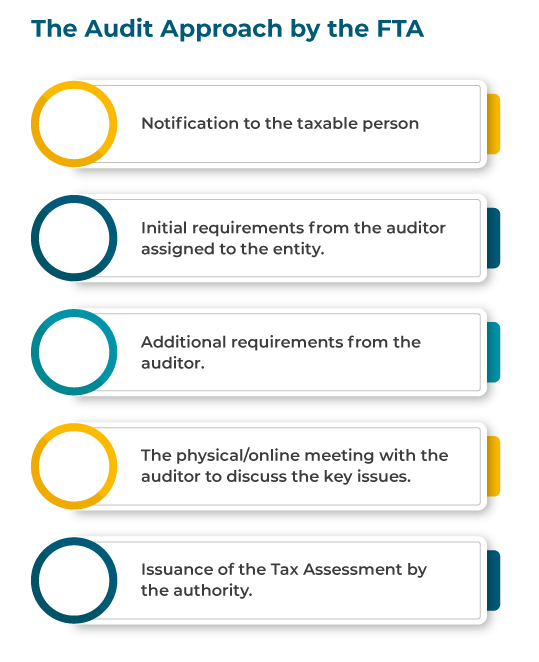
A VAT audit is a check done by the Federal Tax Authority (FTA) to make sure businesses are following VAT rules. Here’s how the process works:
- Notification: The FTA will first notify the business that an audit is coming up, explaining what it will cover.
- Preparation: After being notified, the business needs to get ready by collecting and submitting all necessary documents and records.
- On-Site or Remote Audit: The FTA conducts the audit either by visiting the business in person or checking documents online. They will look at the business’s records and transactions to ensure everything complies with VAT rules.
- Audit Completion: Once the audit is done, the FTA shares their findings with the business. This includes any rules they may have broken and possible penalties.
- Objection Process: If the business disagrees with the findings, they can appeal and follow the objection process to challenge the results.
Preparing for a VAT Audit
Document Readiness:
- Ensure that all relevant documents are readily available, including sales invoices, purchase invoices, contracts, and VAT returns.
Reconciliation:
- Verify that VAT returns accurately reflect the accounting records.
Review Transactions:
- Pay particular attention to cross-border transactions and exempt/zero-rated supplies.
Internal Controls:
- Implement robust VAT processes and conduct periodic internal audits to identify and address potential issues.
Professional Support:
- If needed, seek assistance from tax advisors like HLB HAMT Management Consultancy (HHMC) to ensure proper VAT compliance.
Triggers for VAT Audits
Various factors can lead to a VAT audit by the Federal Tax Authority (FTA). Here are some common triggers:
- Late VAT Return Submissions: If a business submits its VAT returns late, it can raise concerns with the FTA.
- Inconsistent VAT Claims: If there are discrepancies between the VAT a business claims back (input VAT) and the VAT it charges customers (output VAT), this can lead to an audit.
- High-Risk Transactions: Engaging in transactions that are considered high-risk, like cross-border deals, can trigger a VAT audit.
- Large Refund Claims: Claiming big VAT refunds may attract the FTA’s attention and lead to an audit.
- Complaints or Suspicious Activities: If there are complaints about the business or activities that seem suspicious, the FTA might start an audit.
Common Errors in VAT Compliance
VAT compliance is crucial, yet businesses often make common mistakes that can lead to issues with the Federal Tax Authority (FTA). Here are some prevalent errors:
- Ignoring Incoterms for DZ Transactions: Not considering Incoterms for transactions between Dubai and designated zones can create complications.
- Incorrect Classification: Misclassifying goods or services as zero-rated or out of scope.
- Reporting Errors: Failing to report supplies based on correct ownership or not charging VAT on expense reimbursements.
- Poor Record Keeping: Not maintaining separate accounting records per license or ensuring easy access to the Financial Accounting File (FAF).
- Inadequate Documentation: Lack of invoice details, failure to capture receipt dates, and not having tax invoices can lead to non-compliance.
- Claiming Ineligible Input VAT: This includes VAT on vehicle and hotel-related expenses, dependent insurance, and old invoices, which may not qualify for deductions.
VAT Industry-Specific Non-Compliance
Healthcare Sector
To classify a product under the 0% VAT category, three conditions must be met:
- The product must relate to basic and preventive healthcare services.
- It must fall within the definition of medications as per Cabinet Decision 56 of 2017.
- It must be registered by the Ministry of Health and Prevention (MOHP) or imported with its approval.
Non-compliance with these conditions can lead to incorrect classification and potential penalties.
Transportation and Logistics Sector
Common errors include:
- Claiming input VAT on exempt supplies.
- Not charging VAT on the local leg of international transportation.
- Incorrect annual washup and apportionment of input VAT.
Real Estate Sector
Common errors include:
- Mismanagement of VAT on advance payments.
- Declaring VAT without establishing ownership.
- Incorrect classification of real estate transactions for VAT.
- Failing to accurately apportion input VAT between taxable and exempt supplies.
Sole Establishments
Common errors include:
- Failing to maintain proper accounting records.
- Choosing the wrong legal status (natural person vs. legal entity).
- Reporting tax through a third party instead of the sole establishment.
- Not registering with the Federal Tax Authority (FTA).
- Not paying VAT on advance payments received.
HLB HAMT Management Consultancy (HHMC) to assist!
Our expert tax team provides comprehensive VAT services that adhere to all regulatory requirements, helping your business navigate the complexities of VAT with confidence. Contact us today!